
Welcome to Saturday Quilting Bring & Share. Bring along your projects and be part of the joys and the learning curves so generously shared by members of our Worldwide Quilting Community. You can join in the sharing by leaving encouraging messages, tips and ideas in the comments box at the end of any of the blog pages you visit (links below).
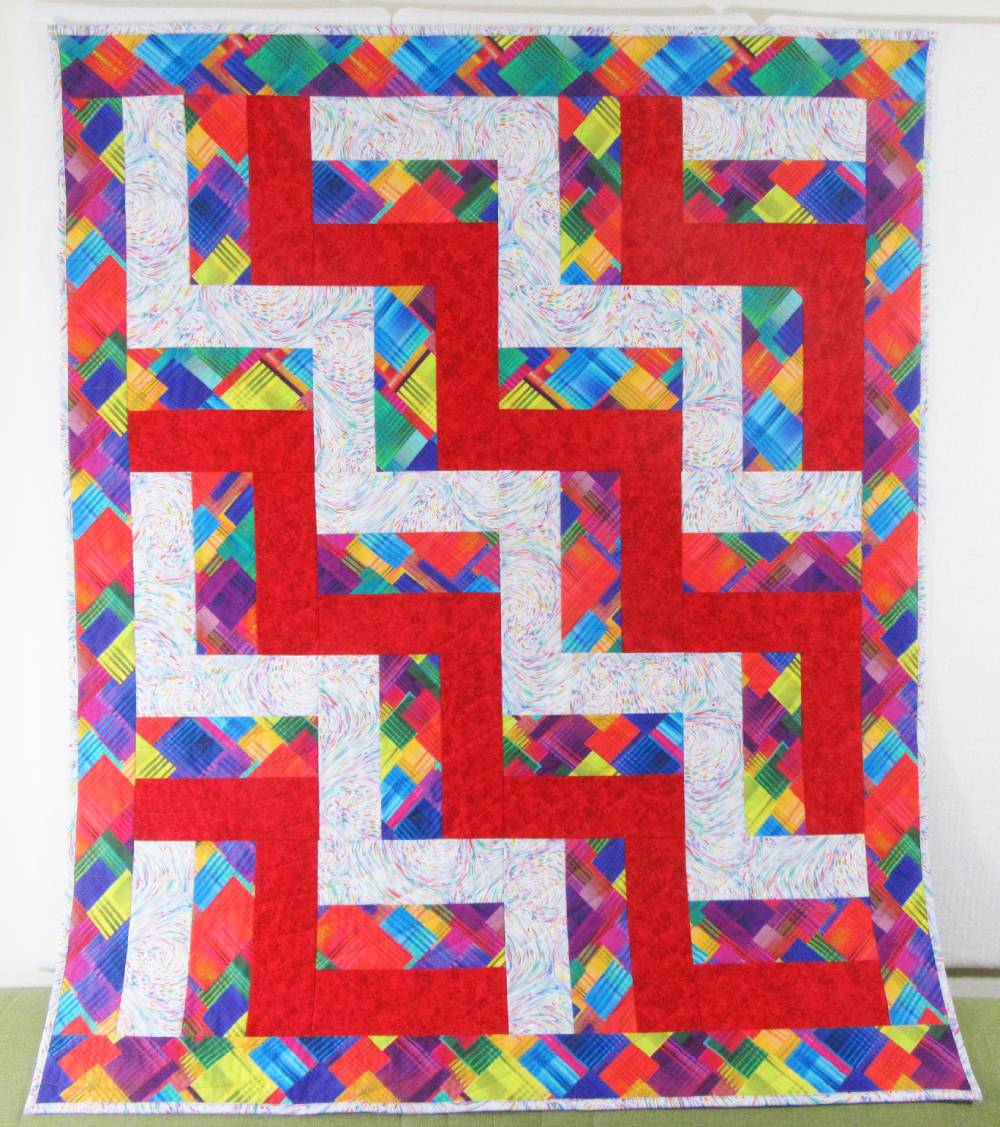
My sewing week was dominated by the build up to a Saturday Workshop and Sewing Social. One of the Beginner’s Course students had voiced an interest in creating a Rail Fence quilt. I thought this was a do-able progression from making the quilted table runner and set about writing a pattern. My test quilt, made from fabrics found in my stash, finished up like this:
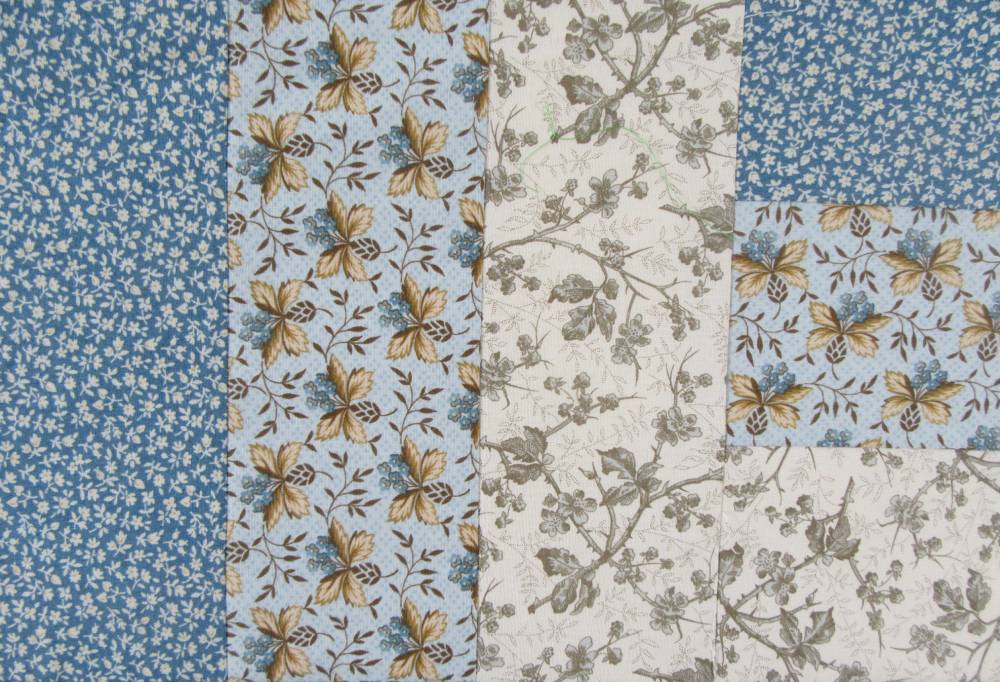
I usually make a quilt alongside a class to help with demonstrating and to remind me of little tips to share as we progress through the pattern. I decided to go subtle with my second Rail Fence quilt, having fallen for some prints by Edytar Sitar of Laundry Basket Quilts.
We all enjoyed watching each other’s quilts develop through the day, especially seeing a variety of colour combinations. Amazing how a block as simple as the Rail Fence can produce such a great variety of looks. But, silly me, I can’t share this with you as I didn’t take any photos 🙄 So there’s just my top to see…

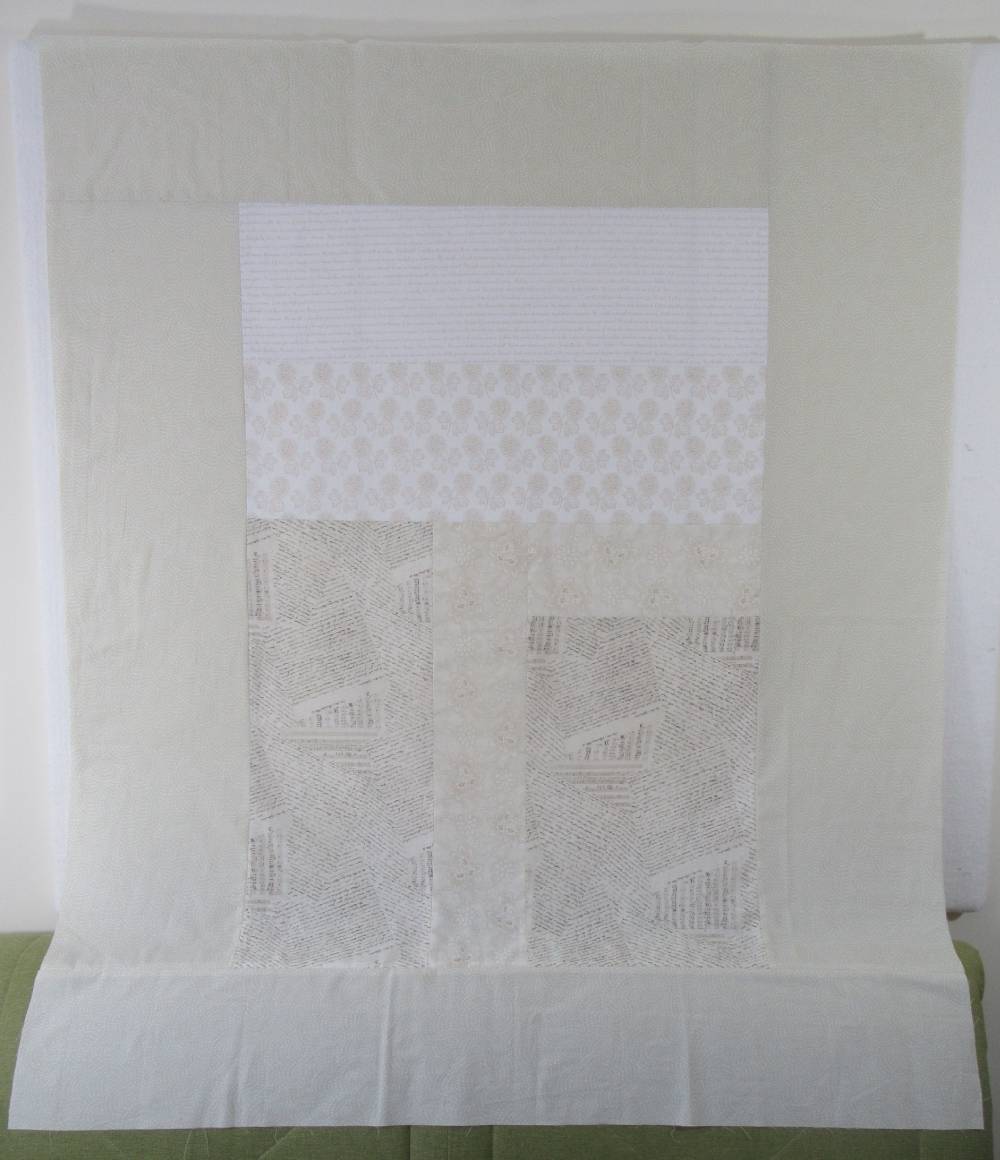
I managed to piece a backing for my quilt using fabrics from my stash. Funnily enough two of the pieces I selected are Edytar Sitar prints – I had no idea she was the designer until I chopped off the selvedge. There’s also my last two pieces of the Jane Austen text print wide back fabric that I’ve used in several projects over the past few years.
I’ve decided to have a go at hand quilting this quilt. It’s not too big at 42½ x 52½”. I’m planning to big stitch a Baptist Fan design using the inspiration and instructions provided by Carolyn Forster in her book ‘Big Stitch Quilting‘. As a treat I’ve invested in wool wadding/batting. I’ve never used wool before, it’s supposed to be very easy to stitch through with a higher loft than most cotton or blended waddings.
Before I get going on the Rail Fence quilting I am going to return to the Modern HST Quilt which is pin basted and ready to be machine quilted. I’m thinking a straight or wavy cross hatch design for this quilt – maybe using the same orange Aurifil thread I used for the Red Rail Fence Quilt.

Here are your links into the Worldwide Quilting Community:
Leila Gardunia sent out a thought-provoking e-mail last week. She had a quilt design in mind and the deadline for submissions to a quilt exhibition was looming. There wasn’t enough time for her to make all the blocks and get the quilt completed so she asked members of her Local Quilt Guild if anyone would help. Of course the LQG got to work and the deadline was met. Sadly the quilt wasn’t accepted for the big exhibition but it will be displayed at the LQG and used to publicise the pattern release. Leila concluded:
The moral of the story?Sometimes you need help and it is ok to ask for it.It almost felt like ‘cheating’ to have other people help me. Like it didn’t really count unless I did everything by myself. But the thing is, we can’t do everything by ourselves. We just can’t. That’s normal and that’s ok.

Fence rail is one of my favorite traditional quilt patches.
It is a very useful block isn’t it and surprisingly versatile for such a simple design.
“Great minds.” When I was still teaching beginner quiltmaking, one of the four free patterns I offered was a rail fence design. It made a 36″ X 48″ baby quilt, and was very popular with students, especially those with some quiltmaking experience who wanted to try something more than simple patches. So, your design looks familiar. I hope you are enjoying pattern-writing and teaching. I love, love, love both!
Yes! It is very rewarding helping people get to grips with the basics and seeing their confidence and skills grow.
I am making a t shirt quilt and I am having a problem with getting the cornerstones to match up with the sashing? Any suggestions?
Hi! Rita Sorry I can’t suggest much other than using lots of pins to keep the seams aligned. You might find this tutorial by Carole helpful https://frommycarolinahome.com/2020/03/11/quilt-sashing-with-cornerstones/
The first quilt I made was a rail fence. You have made me want to make another.
It is a great pattern for beginners as it grows fast and there aren’t many seams to match and it’s lovely to revisit later on in our patchwork quilting journey too!