
Today I’m sharing two recent quilt finishes. The first is a lap quilt/child’s snuggle quilt backed with anit-pil polar fleece, the second is a throw sized Log Cabin quilt backed with a faux fur fleece. I was using these fabrics as quilt backings for the first time so took my time and didn’t try anything too fancy with the quilting.

The lap quilt patchwork was inspired by a cat themed fat quarter pack. I tried to come up with a design that used up most of the five fat quarters. Two of the FQs were Bumble Berry blenders. Searching through my stash I found a piece of bright pink Bumble Berry fabric and used this to make a reasonable sized quilt – it finished up 39″ wide by 43″ long.
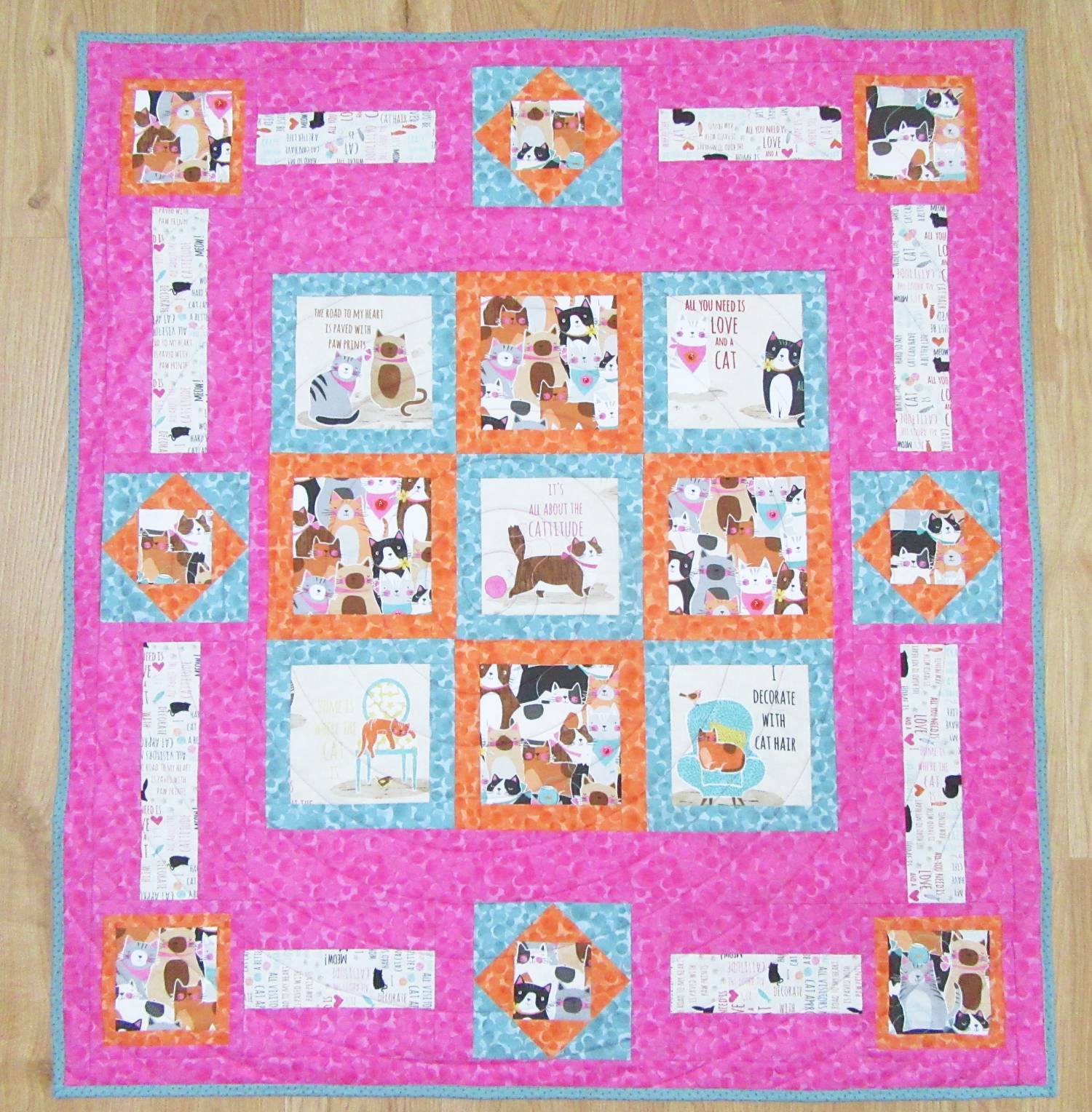
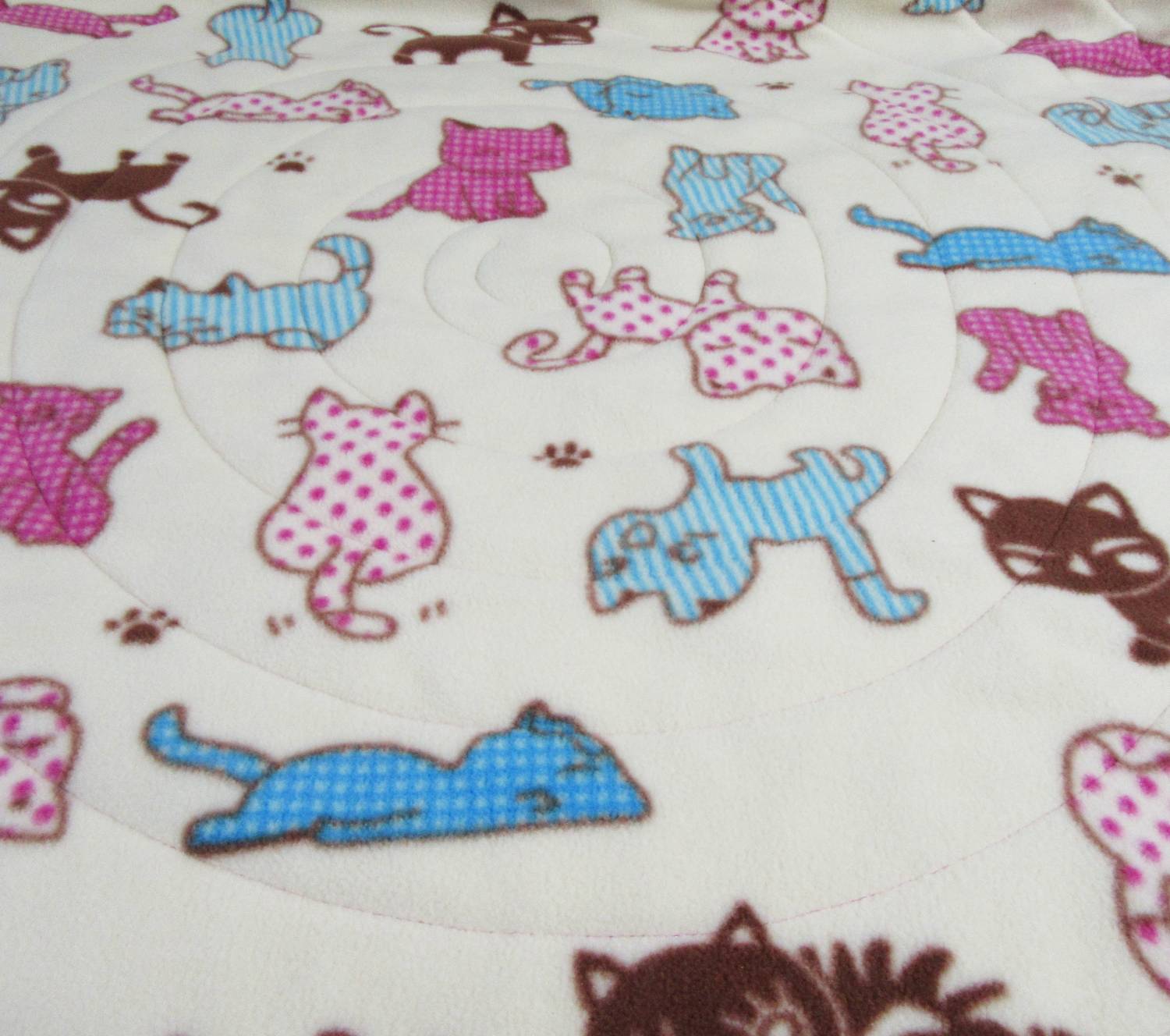
The cat print anti-pil polar fleece was purchased from a large selection at Empress Mills.
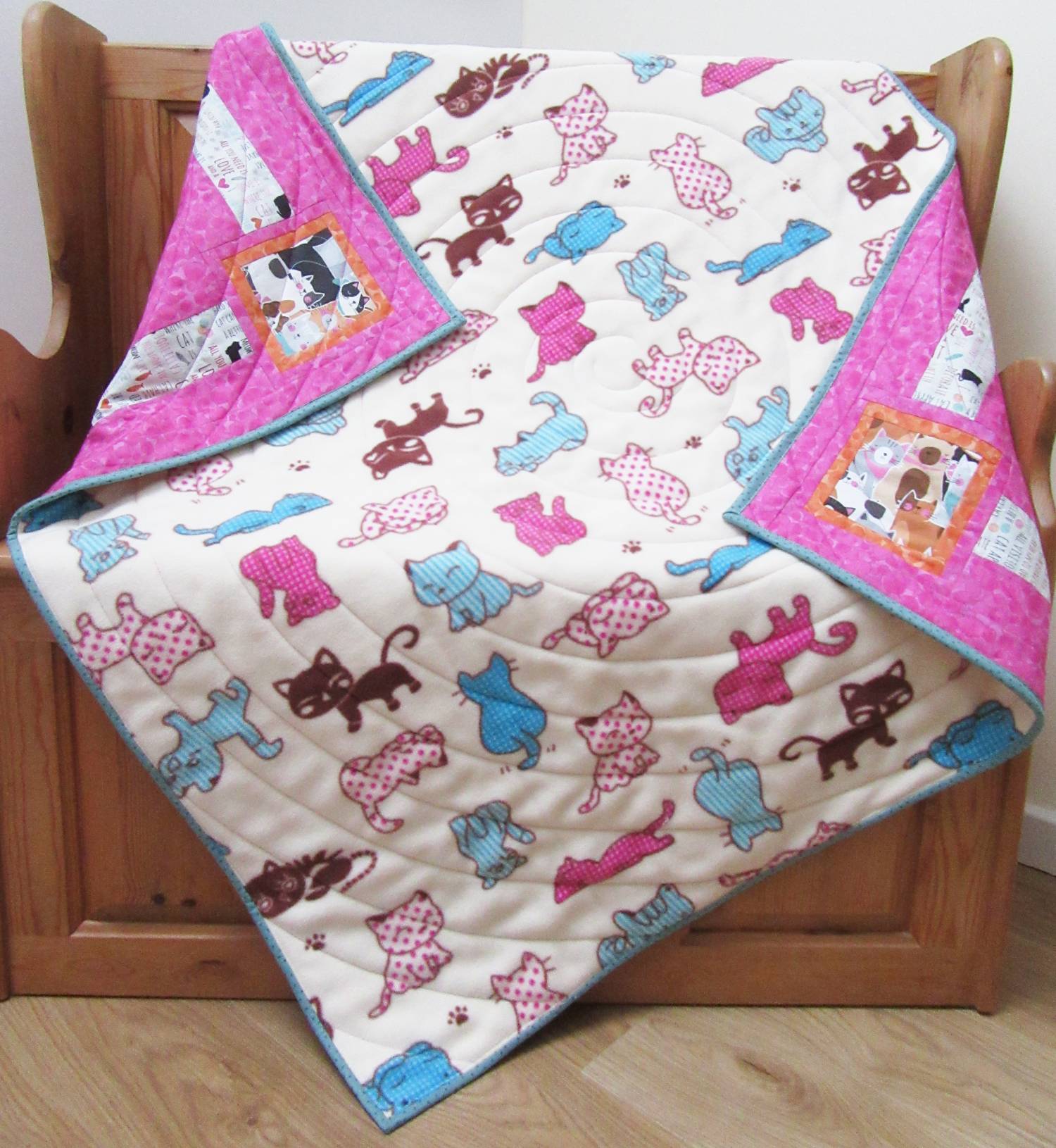
The fleece doesn’t have a deep pile and isn’t silky to the touch. It is good and dense so certainly ticks the ‘warm & cosy’ box. It only has a slight stretch on the length with just a little more give across the width, so not dissimilar to most quilting cottons. I felt fairly confident that it would behave well as a quilt backing! I cut the fleece 3″ larger than the patchwork all round and decided to use a layer of wadding between the two (I cut a piece from my roll of Sew Simple EcoBlend wadding – I highly recommend this wadding made from recycled cotton and polyester fibres). I pin basted the layers from the centre being careful to smooth but not stretch the fabrics, choosing to place the pins a bit closer together than usual just in case the fleece shifted about during quilting – it didn’t!
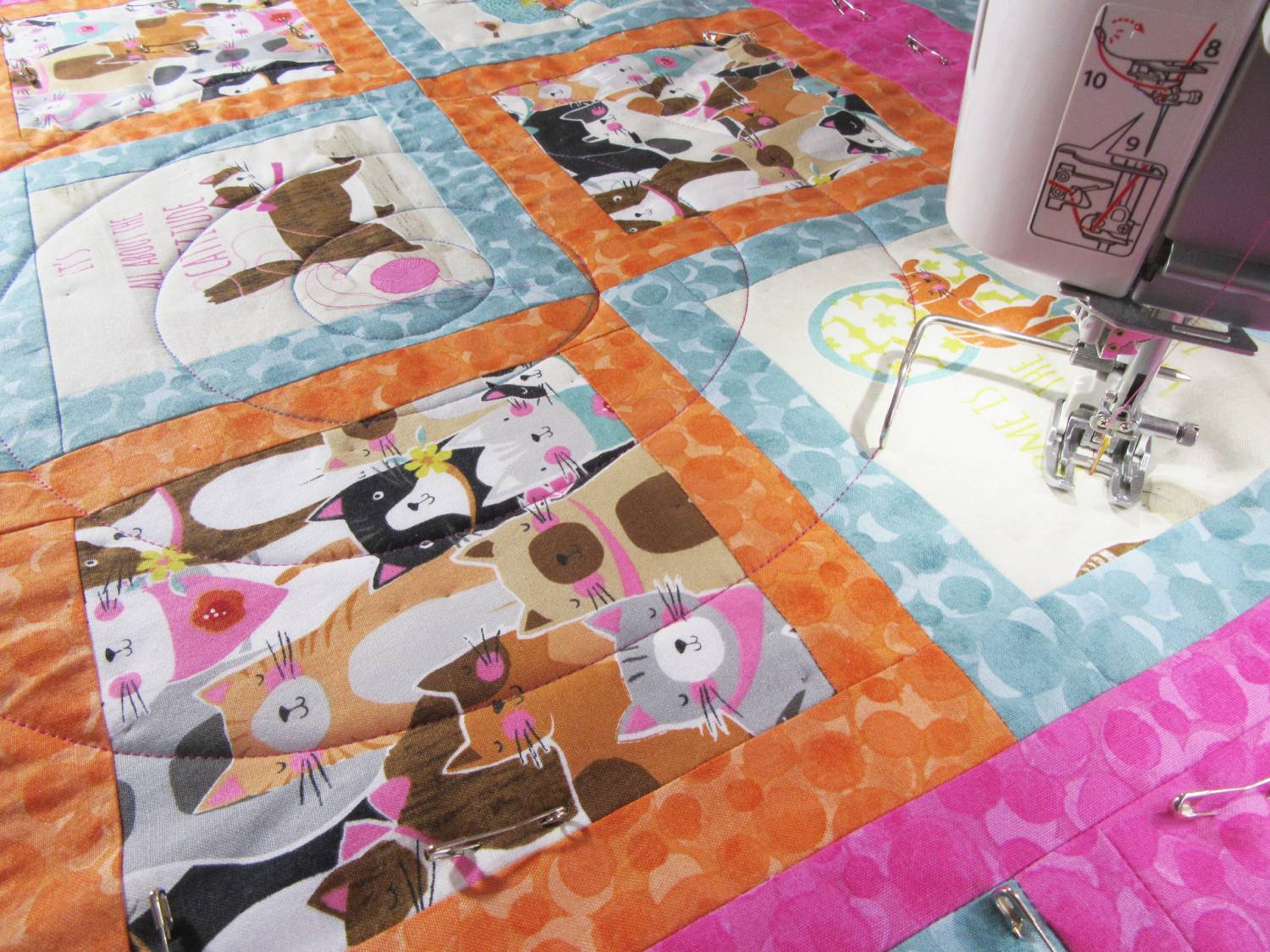
The quilting process was uneventful. The combined layers were thicker than I’m used to but I reduced the pressure of the pressure foot a little and stitched at a slow pace making sure to move the bulk of the quilt around frequently and keeping the portion on the machine table flat. I’m really pleased with the texture and pattern created by the quilting. Definitely becoming a fan of fleece backed quilts!
The second quilt I’ve finished with a fleece-type backing is the one made with orphan Log Cabin blocks. I taught a Log Cabin patchwork class some years ago, these blocks were left-over examples, made from a Moda French General Jelly Roll. Once the blocks were stitched together I purchased a piece of French General fabric to use as the border and then wondered what to use for the backing?
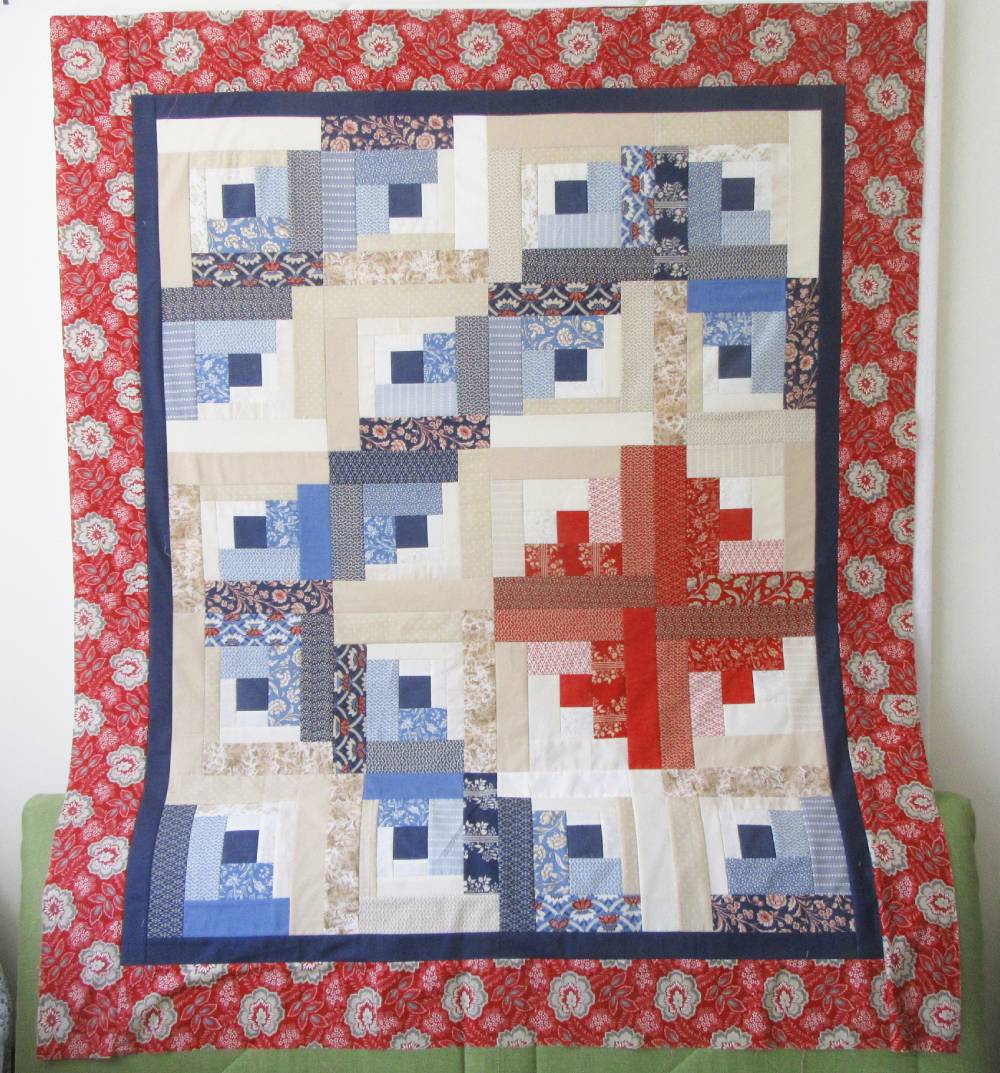
I took a walk up to my local ASDA store and found a grey faux fur blanket that was a suitable size. The faux fur is amazingly silky – and slippery – but like the fleece not very stretchy. When I unrolled the blanket I found it was stitched just inside the perimeter to a rather unappealing polyester backing. It was easy to unpick the ‘quilting’ and part the two layers. Thankfully the exposed edges of the faux fur didn’t shed too badly – although black jogging pants were perhaps not the best choice of clothing for sewing this quilt!
The faux fur fibres were little more than ¼” deep but I wasn’t sure how my machine would cope with a layer of wadding between the backing and the patchwork. I went a bit radical – for me! – deciding to omit wadding, making this a two layer quilt. I pin basted this quilt in a similar way to the fleece quilt above – pinning from the centre with pins about 2″ apart. I use an old table for basting (to spare my knees if not my back) securing the fabrics around the edge with giant bulldog clips. Again I took my time quilting.
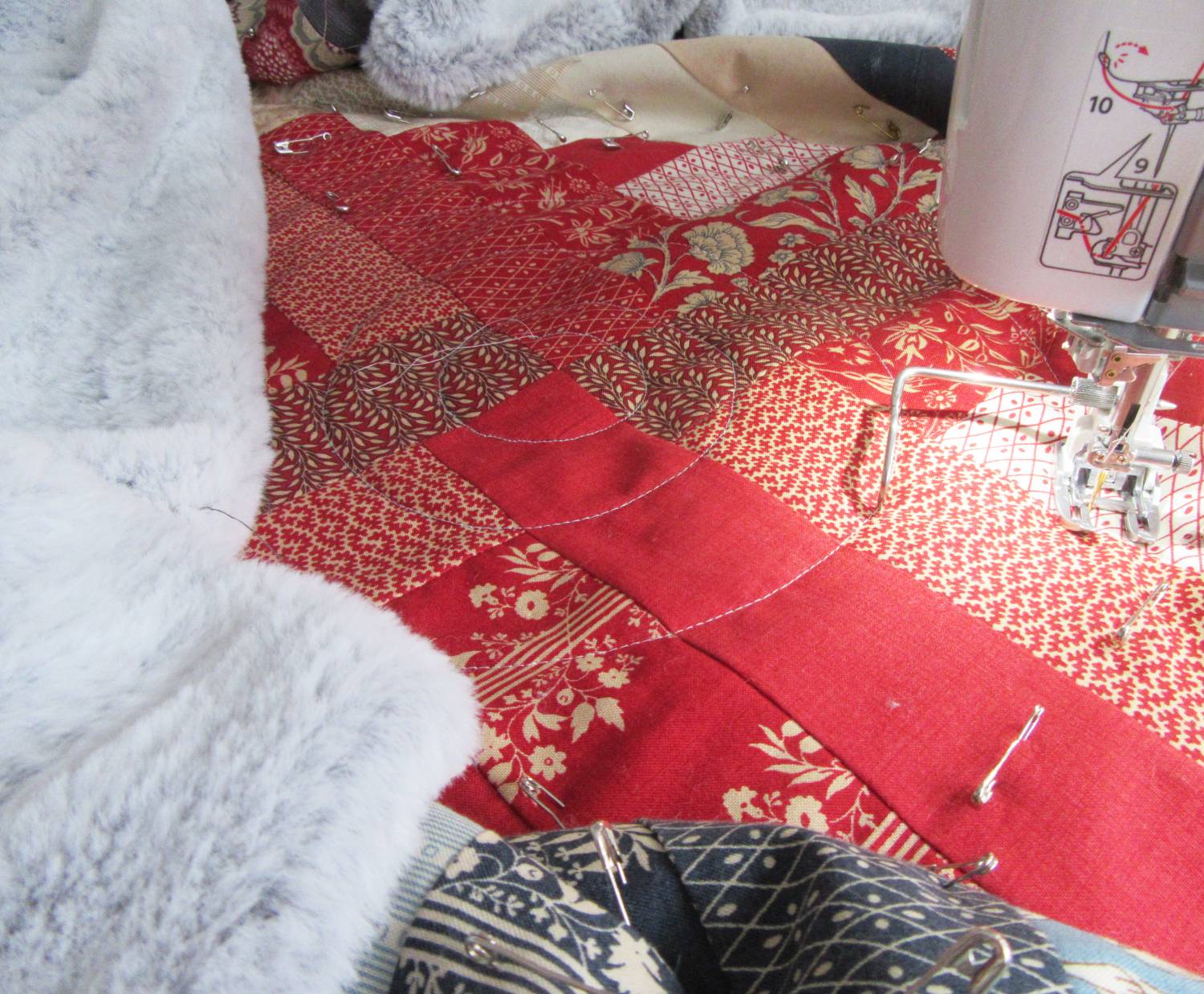
Although this quilt is larger (52″ wide by 62″ long) than the lap quilt it was very easy to manoeuvre under the needle and through the throat of my machine. I wasn’t aware of the faux fur shifting as the quilting progressed. It was only when my spiral reached the edges of the quilt that I could see the patchwork layer was bubbling up. I removed pins, re-smoothed the top and quickly added a line of stay-stitching where necessary (see right of photo below).
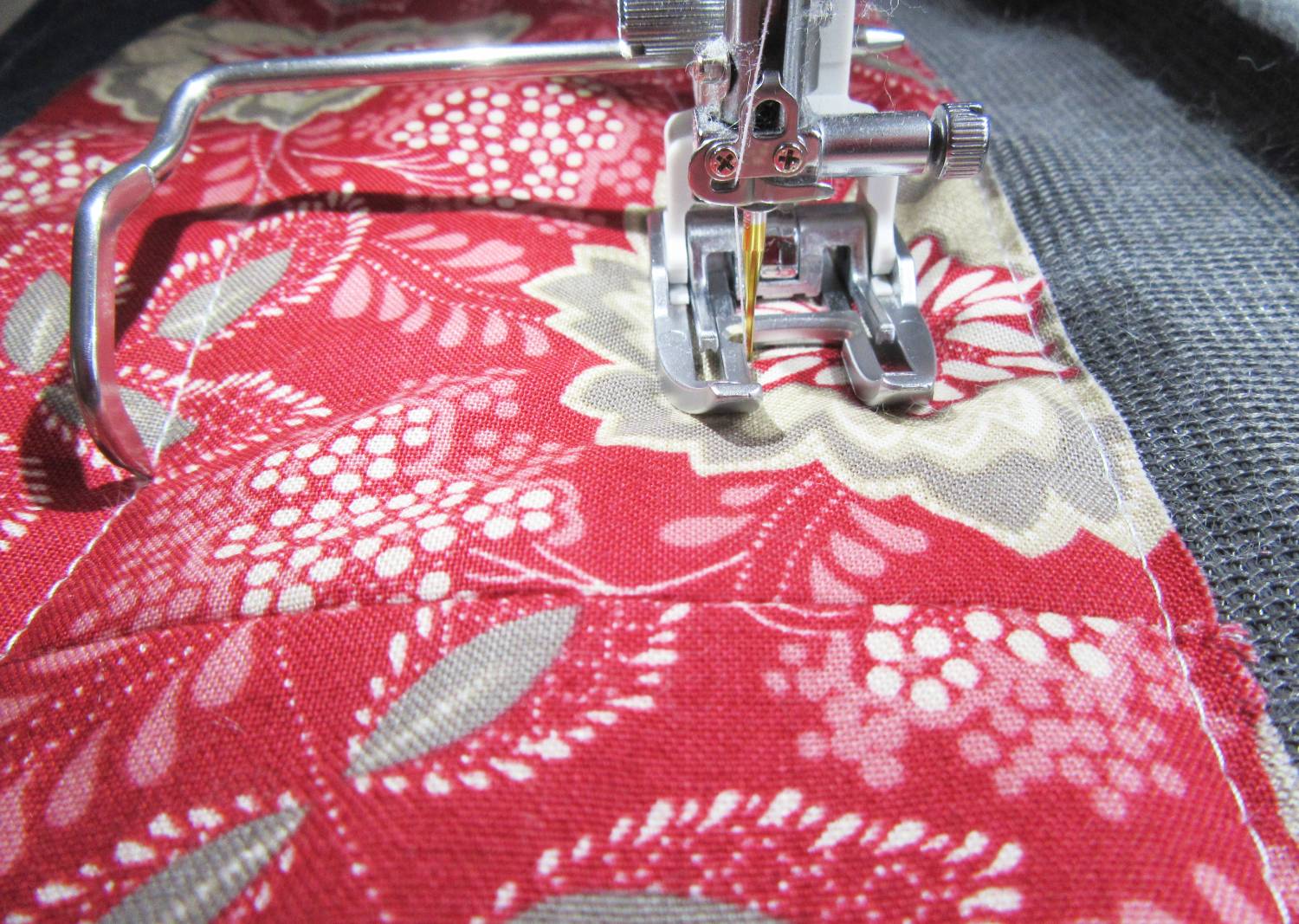
This made the final round of the spiral easy to complete and I was happy to see the top lying flat and square to the backing once the quilting was finished.
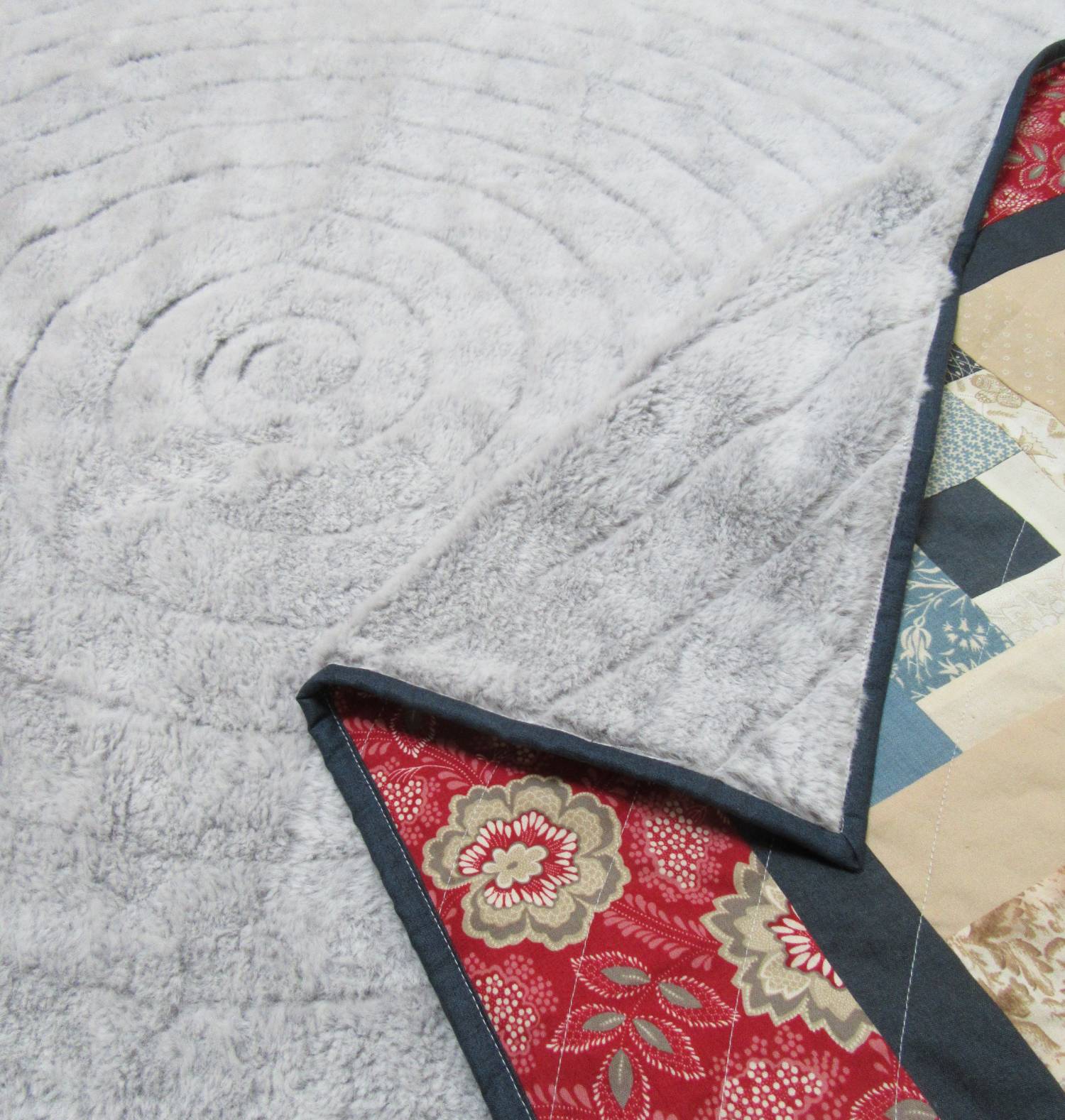
I usually make double fold binding from 2¼” strips of fabric but decided to give myself a bit more wriggle room with the faux fur by making a slightly wider binding using 2½” strips. I kept the walking foot on my machine and stitched the binding to the back of the quilt using a generous ¼” seam. I think having stay-stitches present on at least some sections of the quilt sandwich eased the process of attaching the binding as the pile of the faux fur was obscuring the edge a little. I wrapped the binding round to the front of the quilt and machine stitched it in place with the walking foot still attached.
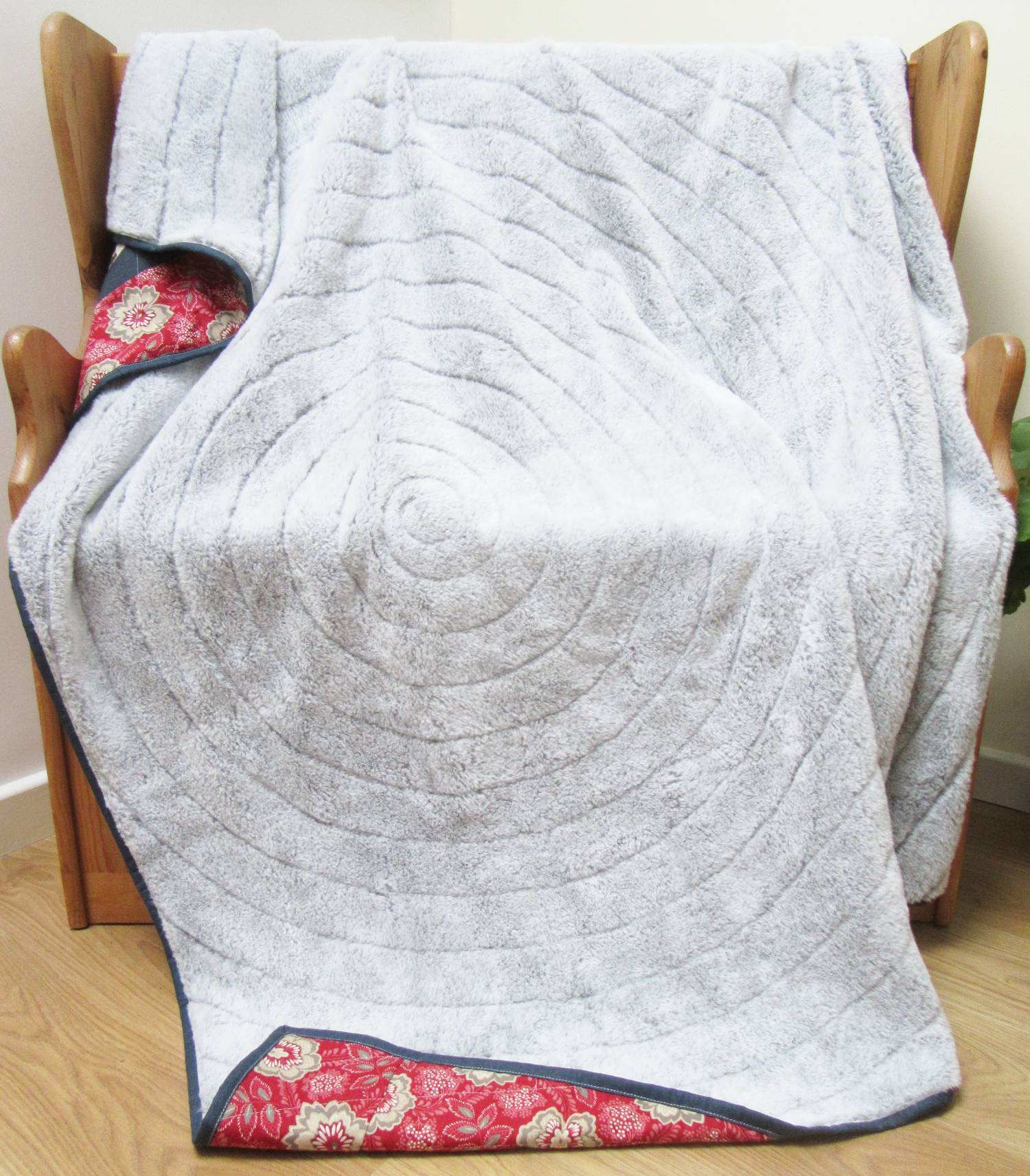
I’m really pleased with the look and feel of the pattern and texture on the back of the quilt. The quilt itself is super-squishy with an amazing drape – it can easily be squashed into a ball unlike quilts made with a layer of wadding. I don’t think I’d want to create a quilt using a deeper pile faux-fur, mainly because of issues with shedding but also because I wouldn’t want to risk getting into a tangle with the quilting (imagine trying to unpick rogue stitching through a fabric with a deep pile!). I definitely call this experiment with faux-fur fleece a success and I’m now curious to try using it with wadding to find out how the layers would work together and how the finished quilt will feel…
Both quilts are now available to purchase from my Folksy Shop (UK shipping only).
As a personal footnote: Thank you for those of you who sent condolences and added your prayers to those surrounding our family. My M-I-L’s funeral was conducted by a Minister who knew her well and the occasion gave us all an opportunity to share memories and comfort one another. Thank you!
Allison

I have never been brave enough to try sewing a fur backing! I bet that is super cuddly! 🙂
It is so cuddly. It drapes in a much more ‘fluid’ way than a quilt with wadding.
Good for you to give those different backing fabrics a go with domestic machine quilting! Your process sounds spot-on, and thorough. You did a lovely job with the spiral walking foot quilting, even to lessening presser foot pressure. If those quilts feel as snuggly as they look, you’ll surely sell them quickly.
Thanks Linda. It is good to experiment isn’t it? Although I’m always a little fearful of messing up a patchwork top while I try out different backing fabrics or quilting techniques. I don’t think my word of the year will ever be ‘adventure’! Happy Thanksgiving!